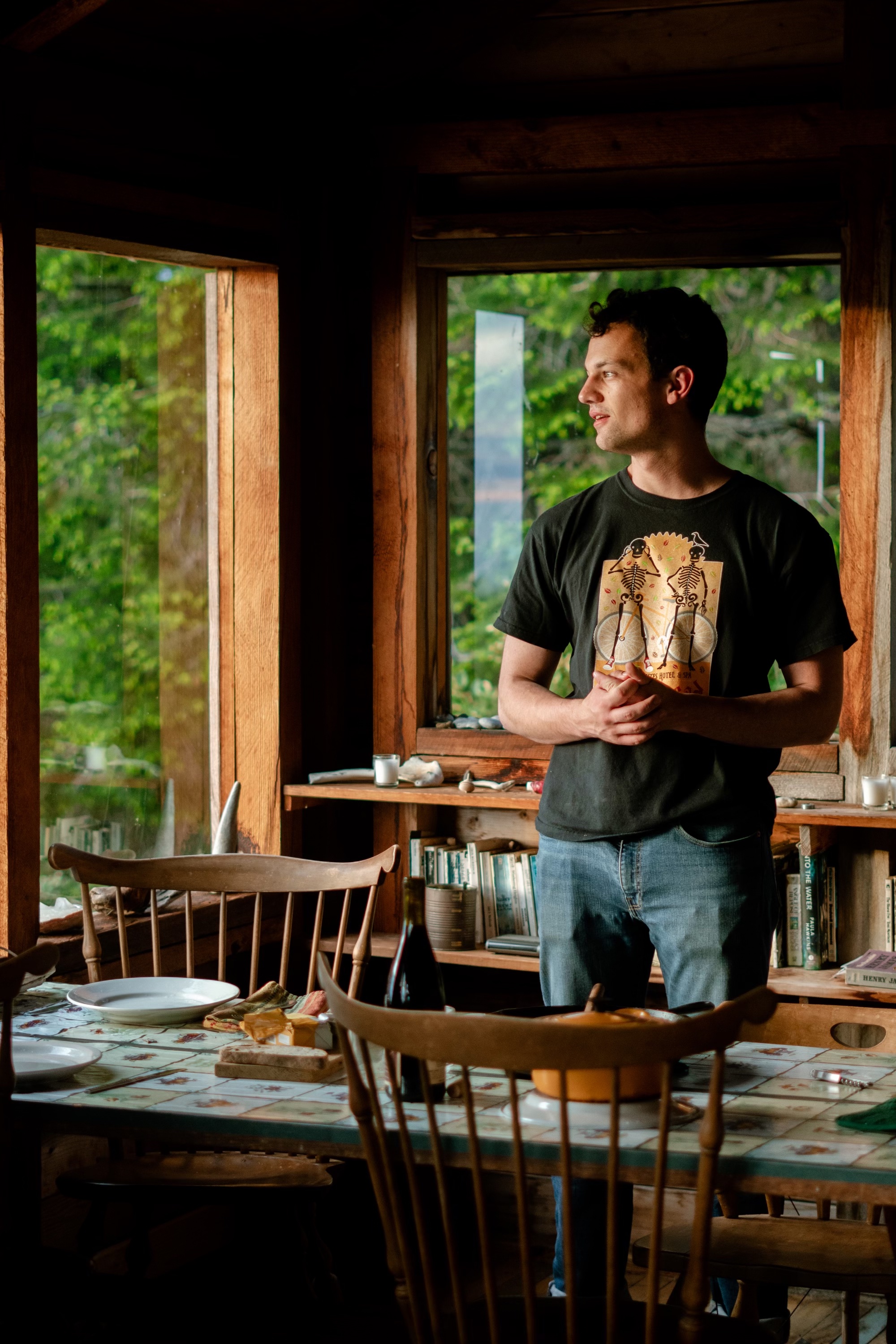
Self-consciously, I went for a run along one of the canals in Paris, and thought maybe there’s no good reason for the Olympics to be held this year.
Three weeks ago, I left the US for Europe and spent a couple of weeks in Paris. This is what I remember thinking about.
The serene Canal Saint-Martin is a short walk from a hostel on the Place du Colonel Fabien in the 10th Arrondissement. Next to the canal, sitting next to one of the locks, is an area for doing body-weight exercises surrounding by shockingly muscular local men and shockingly strong women in white hair doing hanging leg lifts in jeans. I felt self-conscious because while Paris is a beautiful city, it is a city not an attraction. It exists for the people who live there. The areas for running, for exercising are for the people who live there. As a tourist, using it felt like an intrusion enough to think of myself as an outsider, an American.

Weaving between people out enjoying the weather, sweating and breathing hard, I wondered if they could tell I was an American. I also wondered, as I was passed by more and more Parisians on their runs, if I was making my country look bad. “Pick it up! You’re representing our country! They’re going to think Americans are actually a bunch of slow louts who run with a limp.” And then I remembered the Olympics.
The first thing I noticed when I went to the canal, which has wide banks with cobblestones that turn into sand near the bridges, were tents. Like New York, houseless people are everywhere in Paris. Only, in Paris, many of them seem to be sleeping in tents. The closest thing you see to a semi-permanent structure in New York are the occasional cardboard castles under the scaffolding outside certain buildings. But these tents, which were often blue and green but also yellow and black, had mattresses and wooden platforms underneath. I didn’t know who lived in them and I don’t know enough French to ask. Would the populations of the world come to Paris to find houseless people lining the banks of the Seine? As I worried about Parisians seeing Americans as slow, would Parisians worry about the rest of the world seeing them as negligent? Judging by the media’s coverage, nothing gets a city to worry about its houseless population as much as how it makes the city look.
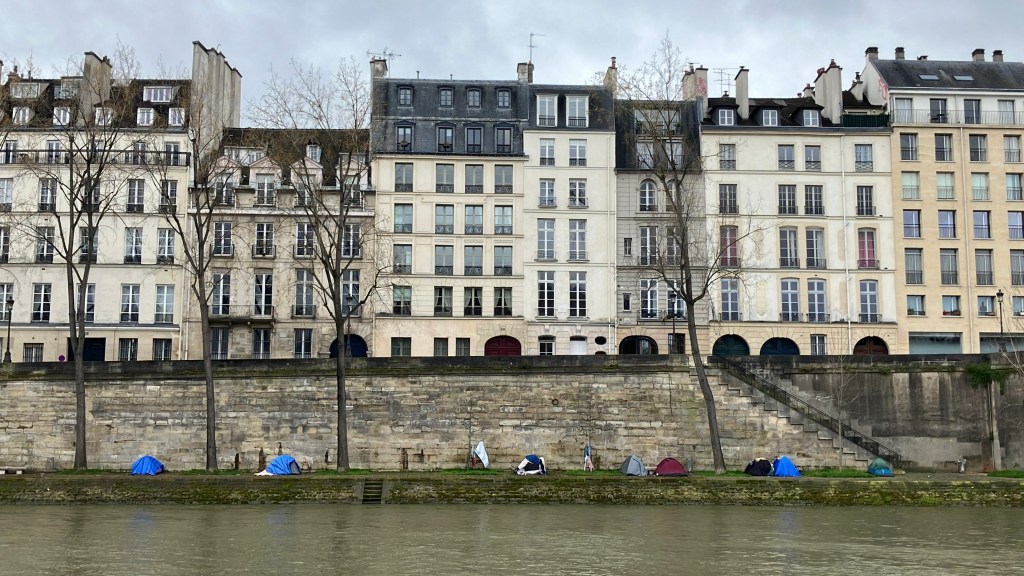
No. They are attempting to move houseless people to outside Paris, to cities like Bordeaux and Lyon, ahead of the Olympics. The Olympics, in my mind, are more about the discovery of information than about competition. It’s a way for other countries to mingle with each other, to give the rest of the world a little information about them, about how they live and what they value. At the same time, as I stumbled down the cobblestone street, what was I telling the people of France about myself, and what I thought was important?
By my hacking cough? Cigarettes. By my belly? Croissants, wine, baguettes. By my sweaty face? Health and physical fitness, as well as whatever attractiveness or beauty may come with. Hopefully, they could tell how desperate I was to fit in. But beyond that, about me as a person, nothing. What could I tell about them from their cigarettes, croissants, wine and baguettes? Nothing. I knew no more about the people of Paris than they knew about me or the people of the US. Because if I had stopped to learn I would have had to find out that the people of Paris may live differently from people in the US, but anyone I met would be, in some way, distressingly similar to people I already knew. The differences could dazzle with their details and variety, but not so much that it could go beyond human experience.
Trite, or overstated as it may be, people all over the world are still people. Not a disappointing fact but a beautiful one. The unanimity expressed in the consistency of cares, worries, hopes, dreams and irritations. The variety expressed in the difference of expression, of thought, of inquiry, all things that a person can only glance at in the span of a couple of weeks, or years, spent among strangers.
But the Olympics feel like they exist so countries can continue to legitimize the existence of countries. So that we can pretend that a country is some human material, something other than what a government does with its power and why. If that power was used to keep itself in check, to stop the party until it seemed like a good time to celebrate, the Olympic games might not look like such a farce. This while a country murders with impunity using weapons provided by another. Why play games representing this, what a country does? How can this say anything about power except, “We don’t care”? In the play of unity, community and exchange of information, how can we see anything other than murderer or accomplice? When the torch is being carried and they play that song, what are we supposed to hear?

 Benjamin Linder
Leave a comment